Transformations

Movement for every body

Blog

  • Counterpunch Parkinson’s Second Site:       now at the Wreck Room in Auckland Central!

    Counterpunch Parkinson’s Second Site: now at the Wreck Room in Auckland Central!

    Greetings All — We have some exciting news for you!!

    Counterpunch Parkinson’s is thrilled to be combining forces with New Zealand’s top female boxer, gym owner, coach, physiotherapist, olympian, AUT lecturer, and all around fabulous human ALEXIS PRITCHARD.  

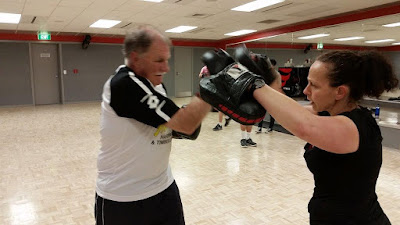
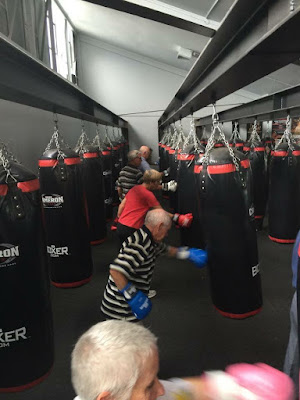
    Counterpunch Parkinson’s non contact boxing classes will be available at The Wreck Room in Eden Terrace, Auckland City Centre as of MONDAY, JULY 25th.  Counterpunch Parkinson’s classes will be offered twice weekly — on Mondays and Wednesdays fro 10:00 – 11:00 am

    Please let any of your service users or members enquiring about classes in the city centre know — we are so excited to have a second Auckland Counterpunch Parkinson’s up and running and to be teaming up the Alexis — we know the boxers joining her program will be in for an amazing experience.

    Enrolment is essential — please direct interested boxers to – [email protected] or have them call Lex at 021 220 4842 or on the landline 09 309 2184 (and leave a message) — check out THE WRECK ROOM HERE

    Here is to more People with Parkinson’s having access to boxing and exercise and community — 


  • When life gives you Parkinson’s, COUNTERPUNCH

    When life gives you Parkinson’s, COUNTERPUNCH

    The last few months have been busy, and a bit all over the place for me, to say the least, and my blog has been sadly neglected.  Resuming private practice and building a business that is sustainable and reflective of the work I want to be doing in Conductive Education and personal training while trying to get a semblance of work life balance have been energy and time consuming processes.  My business is starting to take shape – some conductive groups, some private clients that I see in their homes, some personal training at a groovy gym with a great team of fitness professionals, some consulting, and lots of boxing groups for people with Parkinson’s. I’d like to tell you a bit about what I’m doing with boxing groups for people with Parkinson’s, why this appealed to me in the first place, and about why I love and value this aspect of my work so much.

    For the past several years I’ve been reading about the work of an organization called Rock Steady Boxing based in Indianapolis, USA – in recent months I’d say seldom a week passes when they do not come up in my RSS feed.  Starting serendipitously – one person with Parkinson’s boxing intensively with a trainer and seeing dramatic improvements – Rock Steady literally have taken the idea that non-contact boxing might be a useful exercise modality for people with Parkinson’s and put it on the map.  They have developed programs, they have upskilled fitness and allied health professionals, and now have over 150 affiliated organisations and gyms offering their program in North America.  

    Find out more about Rock Steady HERE

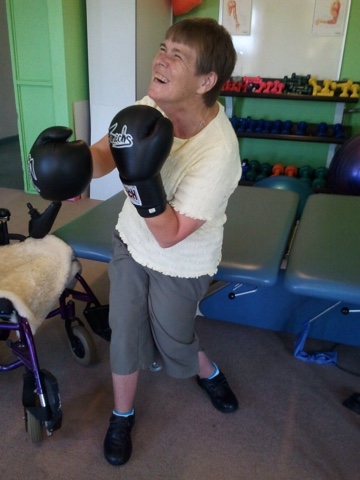
    Part of what caught my attention about the Rock Steady program is that it seemed to bring together disconnected parts of my two professions.  I have been working with people with Parkinson’s in Conductive Education classroom settings for nearly 20 years.   As a personal trainer with boxing qualifications, I have been using boxing based training with many of my clients and have enjoyed adapting boxing drills to make them wheelchair friendly – and love boxing as part of my own fitness work too.  So at this very base level the idea of boxing groups for people with Parkinson’s was exciting, and the idea niggled at me, kept calling me, and I decided to try to get a program running here in Auckland based on my own knowledge and experience, so I could see for myself how it might work.  

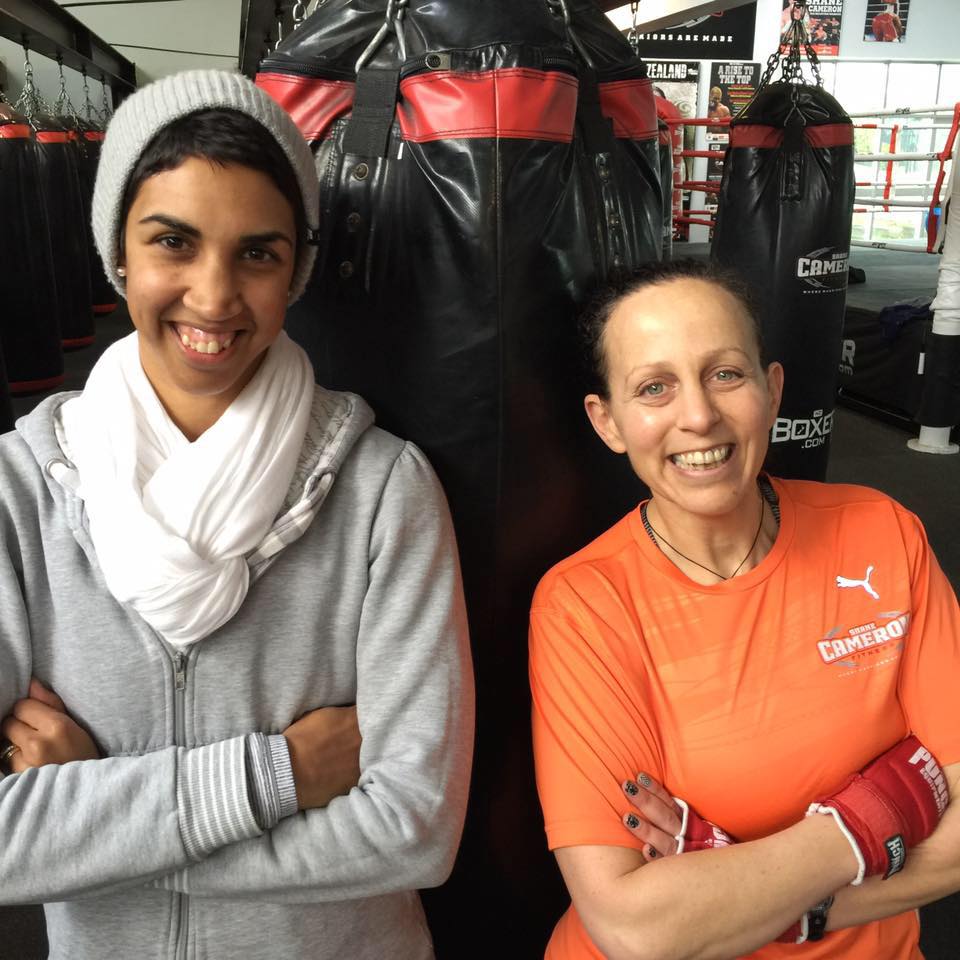
    In October of last year SM, a colleague in the fitness industry, and I trialled a Parkinson’s boxing group at the local YMCA where she worked -with some of the wives of my boxers and my husband helping out as program assistants.  The program went from a handful of brave participants all known to me to a large group in a matter of months.  We quickly outgrew the space we were using at the YMCA and I approached Shane Cameron, the owner of a local boxing gym and a New Zealand boxing champion about bringing my program over to his facility. I showed Shane what Rock Steady were doing in America and he came to watch my boxers – and he saw the magic that I saw.  

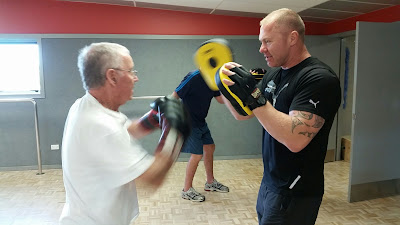
    One of my boxers taking on Shane

    Shane and I are now working towards emulating the Rock Steady model here in New Zealand, customising a program we have called COUNTERPUNCH PD and developing a training module for fitness professionals, and working to make COUNTERPUNCH PD available to people with Parkinson’s nationally in NZ – watch this space for more details.  I will travel to Indianapolis to do the Rock Steady training course in August and am so excited about that; I am equally excited about experimenting with and encorporating Conductive Education tasks and methodology in a boxing environment and about making this program my own.  

    Research has qualitatively and quantitatively supported the Rock Steady program.  However, the anecdotal and human interest stories featuring people with Parkinson’s talking about what they get out of boxing groups speaks far louder to me.  It has been exciting and affirming to see my boxers make improvements and speak of the same results.  

    Have a look at Research about Boxing for People with Parkinson’s HERE

    It should also be noted that they exercise guidelines for people with Parkinson’s have changed a lot over recent years with higher intensity exercise such as boxing being recommended, and the idea that the right exercise can be neuro-protective and promote neuroplasticity has been thrown around – I will address those concepts in a blog post in the very near future.  

    From a Conductive headspace, there is so much about boxing for people with Parkinson’s that makes sense to me – the use of visual cuing and rhythm for movement, the use of voice with movement, having something tangible as a target for movement; directly addressing movement challenges of Parkinson’s such as complex coordination, agility, balance, speed and size of movement and practicing them and working to make them better instead of accepting them as problems; working in a positive and social group of peers; having fun; being challenged and being expected to rise to the challenge; the idea that there is an active and empowering approach that enables people to feel like they can do something to take control of their Parkinson’s; the allegory of literally fighting Parkinson’s – of being able to COUNTERPUNCH – and the sense of hope that comes from fighting. 

    Watch a video featuring one of my boxers talking about the program

    I love all of those aspects – boxing for people with Parkinson’s makes clinical sense and is effective. But what I love most is that every session people with Parkinson’s walk into the gym and as they put on their wraps and gloves and head out to the heavy bag or speed bag to warm up they transform into boxers, or kids happily playing, or some amazing combination of both.  I almost forget that they have Parkinson’s – but more importantly, at least for that hour they seem to forget that they have Parkinson’s.  It is amazing, magical, and transformational – and so much fun to be a part of.

  • Faith, trust, and pixie dust …

    Faith, trust, and pixie dust …

    It makes me sad that so many well intentioned charities and non-profit organisations struggle because they rely on old school models of financial viability – begging, donations, hand outs, grants, and philanthropy — instead of developing sustainable models of self sufficiency through things like social enterprise and responsible capital ventures.  It makes me sad that these organisations are so stuck in this old way of doing things that even in times of financial crisis that threaten their very survival they cannot change.  In the same way that a practice like Conductive Education is a paradigm shift from a medical model approach to managing disability, charities learning to think like businesses is a paradigm shift and it makes me sad that there is so little help for charities who need to come around this corner if they are going to survive.

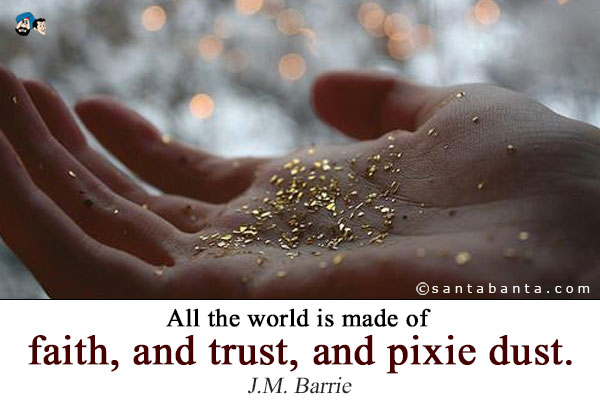
    Don’t get me wrong – I like the idea of living in a world made of “faith, trust, and pixie dust” as much as the next person.  In fact, those who know me well would probably tell you that in my head and in my heart that is the world that I live in, and I would respond by saying that believing in that world influences the way that I choose to move through this world.  This world needs people who create potential for “faith, trust, and pixie dust” by creating ways to make important things happen — and that includes finding ways to cover the costs of whatever these important things are.  We don’t have to all agree on what those important things are, but we do have to agree that sometimes opportunities need to be created and where appropriate capitalised on, so that more important things in this world can get done — so that there is more pixie dust to go around.  That is my personal definition of entrepreneurship.

    For some people, the important thing is about human exploration, getting people to mars; others try to invent things that will make our lives more efficient; some want to influence the world through the establishment of an essential service, for others the important things are to do with music and art.  Everyone has their passions and priorities.  In my world those important things that need to get done are around helping more people through Conductive Education and through exercise and movement.  I’ve left the non profit sector because I believe that out here in the real world I can build something that will create more pixie dust; in the charity sector I was wasting time waiting for pixie dust, begging for pixie dust, and then having to filter my portion of pixie dust through hoops and red tape and then still bow down to the pixie dust purse holder who dictated how I could use that dust.  By this time the pixie dust feels more like regular dust – the sparkle is gone.

    I look to people in my field who seem to leave a sparkly trail of pixie dust wherever they go — people who have created business models that have enabled them to conductively help more people, and to do so on their terms, while adding to the available pool of pixie dust.  I always look to them for inspiration, to admire what they have done and created, to admire their work ethic, determinism, and can-do attitude, and to admire their courage to step into this world and to do something different instead of letting themselves wither in dystopia of the other.  I look to these conductive entrepreneurs to admire their ability to cherish and uphold the ideals of “faith, trust, and pixie dust while carving their own path of “second star to the right and straight on ’til morning”. 

  • Don’t stop me now!

    Don’t stop me now!

    In just over a week I will be taking Transformations, my personal training and private Conductive Education business, to a new home base, to a brand spanking new facility with sparkling new state of the art equipment, to the new Les Mills gym that will open in Newmarket Auckland in November.  I was asked to apply for this contract — to bring my combined experience in fitness and disability into this mainstream fitness arena.  It is such an amazing opportunity… for me professionally, for Conductive Education, and most importantly for people with disabilities or health conditions who are tired of being relegated to therapy and rehabilitation environments and church halls.  It is such an amazing opportunity to do something that I’m so passionate about, and I am so grateful for this opportunity, and I am so excited to get started, but as often happens when I’m excited about something I’m also really anxious, really scared.

    So scared that I almost talked myself out of the application and interview.  So scared that I’m having to battle my inner fat kid who always comes a-knocking when I’m worried that I’m not good enough for the challenge ahead or that I might possible show that I’m human by dropping a ball as the balls get rolling.  So scared that I’ve actually taken genuine control of my own health and fitness for the first time in ages.

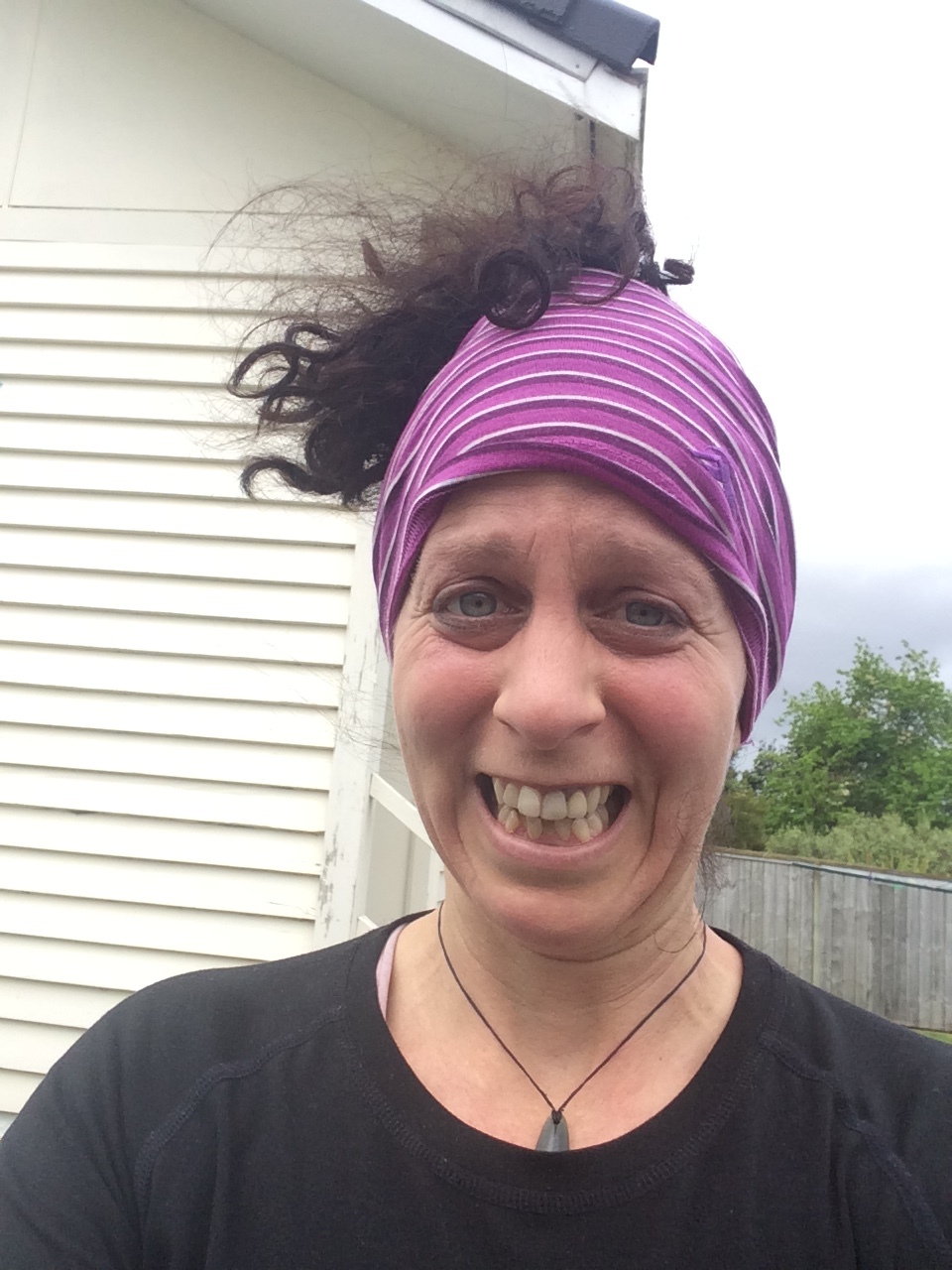
    So yesterday, I was out for a run.  It was very windy, and a little bit rainy, and way too cold for this time of year and the hills seemed steeper than the last time I’d attempted them, but I had set a training target for myself and I went for a run. And today I’m baking brownies for a friend’s birthday tomorrow and even though I actually think that I have mastered the fine art of ganache, I haven’t licked the spoon to taste because I’ve taken control of my eating again and I’m feeling so much better or that.  Grant me the courage to to take charge and to change the things I can, something inside me whispers.  

    So yesterday, while I was out for a run, and while I was feeling proud of myself for being out there, and in control of myself which is really the only thing I can control, this song came through my speakers…

    Don’t stop me now, ’cause I’m having a good time…

    And while I was running and singing along like a crazy gal, I started to notice that the scared was gone, and that I was feeling happy, and excited.  In this headspace I started to think about my pending opportunity again.  I started to think about the gift of being a conductor, and how as a conductor I have a skill set that makes me an excellent personal trainer.  I can patiently break movements down and teach them over and over again until I am understood until my client learns and I understand that it is my job to do this (thank you Conductive Education);  that when my words aren’t enough I can teach with my hands and my voice and my facial expressions; (thank you conductive mentors operating in a language that was not your own); I notice and celebrate the tiniest of achievements and this motivates and instills confidence in my clients (thank you conductive pedagogy); that I know to meet people where they are at and do so honestly and realistically while always looking ahead to I can help them work towards their goals and their next step (thank you AS for teaching me about dynamic potential).

    And while I was happily running I was able to approach my scared, anxious inner fat kid conductively, from a place of kindness, the way that I believe in approaching my conductive and personal training clients.  We looked at our current health and fitness together; we looked at our disappointment with not being as fit and strong as we once were in the context of a few years of a stressful desk job and made peace with this disappointment so we could start to move forward, and we really thought about our current goals (feeling healthy and well again, exercising habitually, and enjoying that habit) and about how we might be able to judge our current self against those instead of against some imaginary standard that we had no actual motivation or interest in anyway.  One foot in front of the other, one step at a time over hills, through barriers to a place where my inner fat kid was no longer standing between me and my exciting opportunity.  And I let myself and my inner fat kid share in this feeling of excitement — because after all she and I are in this together.  Grant me the serenity to accept the things I cannot change, which means making peace with who I am now, inner fat kid and all, so that I can continue to grow and thrive, something inside of me whispers.

    In just over a week I will be taking Transformations, my personal training and private Conductive Education business, to a new home base, to a brand spanking new facility with sparkling new state of the art equipment, to the new Les Mills gym that will open in Newmarket Auckland in November.  It is such an amazing opportunity to do something that I’m so passionate about, and I am so grateful for this opportunity, and I am so excited to get started.

    Good Enough

  • It Takes a Community…

    It Takes a Community…

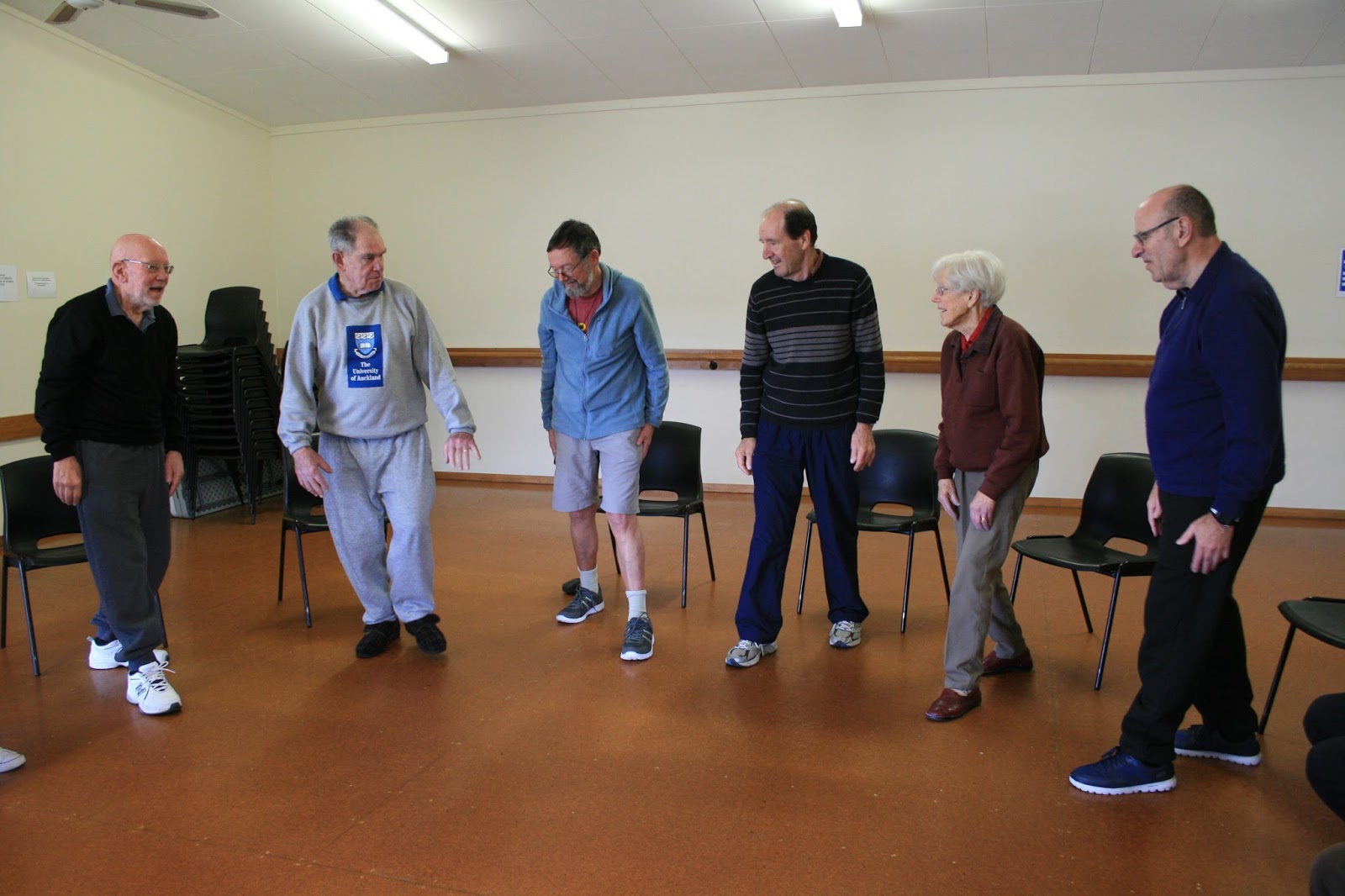
    School holidays have just finished here in Auckland, and we are now settling into the last mad dash of fast paced weeks leading into the holiday season and summer.  Normally when working with adults in rehabilitation or fitness settings the timing of the school holidays doesn’t really have any impact on service delivery.  However, the lovely community centre where I hire space for my Parkinson’s CE group runs a plethora of children’s programs during the between term holidays, and my lovely little room is not available so we take a break.
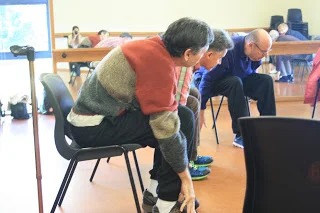
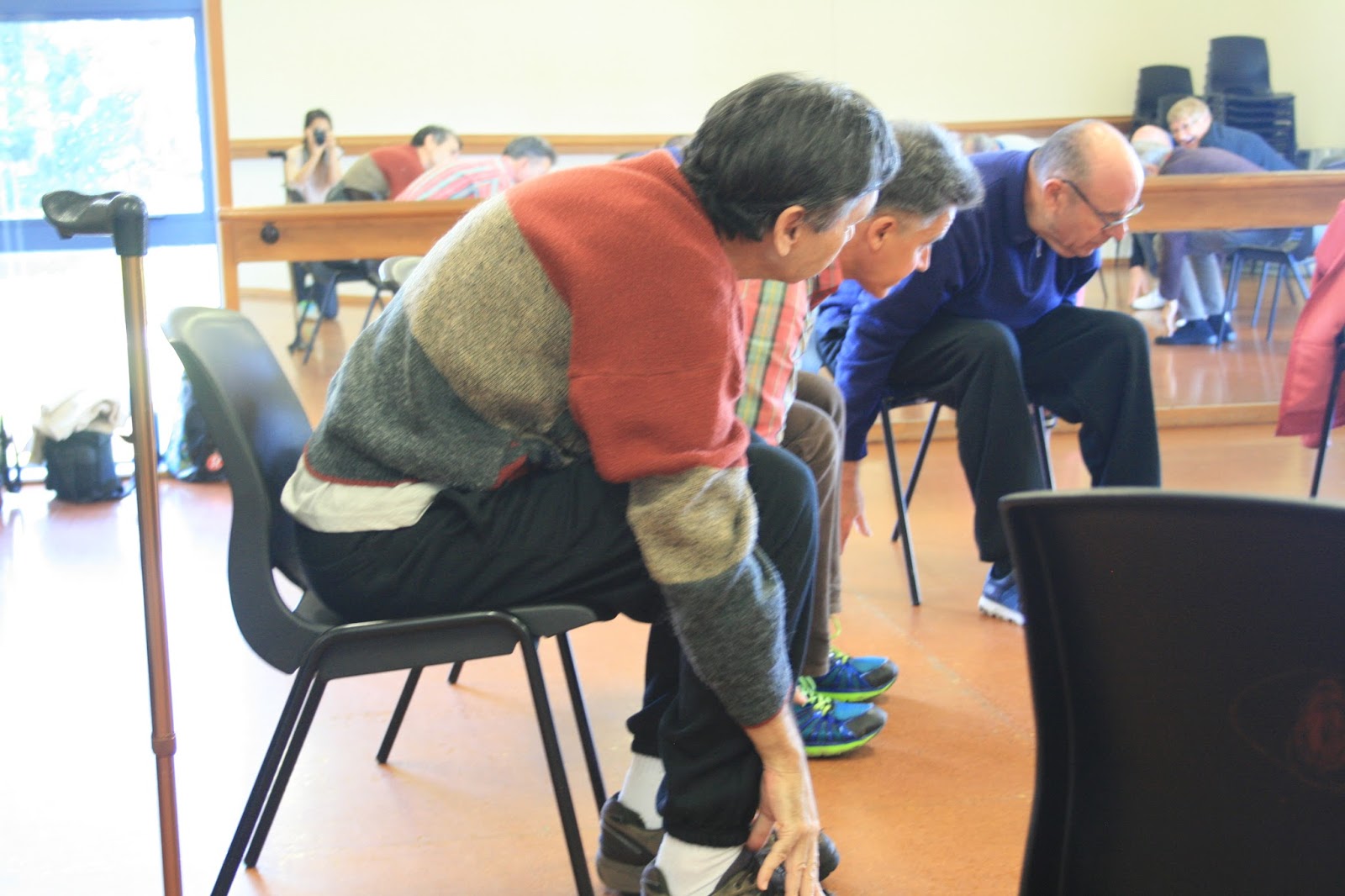
    Many of the people attending this group have been coming fairly regularly since last September and all but one — who is moving out of town — have signed up for the next term which starts this Friday.   Before we broke up at the end of the school term I surveyed them to find out what they were happy with, what parts of the program they enjoyed the most or found the most useful, what they didn’t enjoy, what they struggled with, and what suggestions they have for future sessions.  I gave them the choice of anonymity so that they could be honest and open in their response.
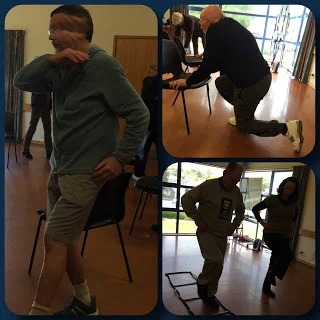
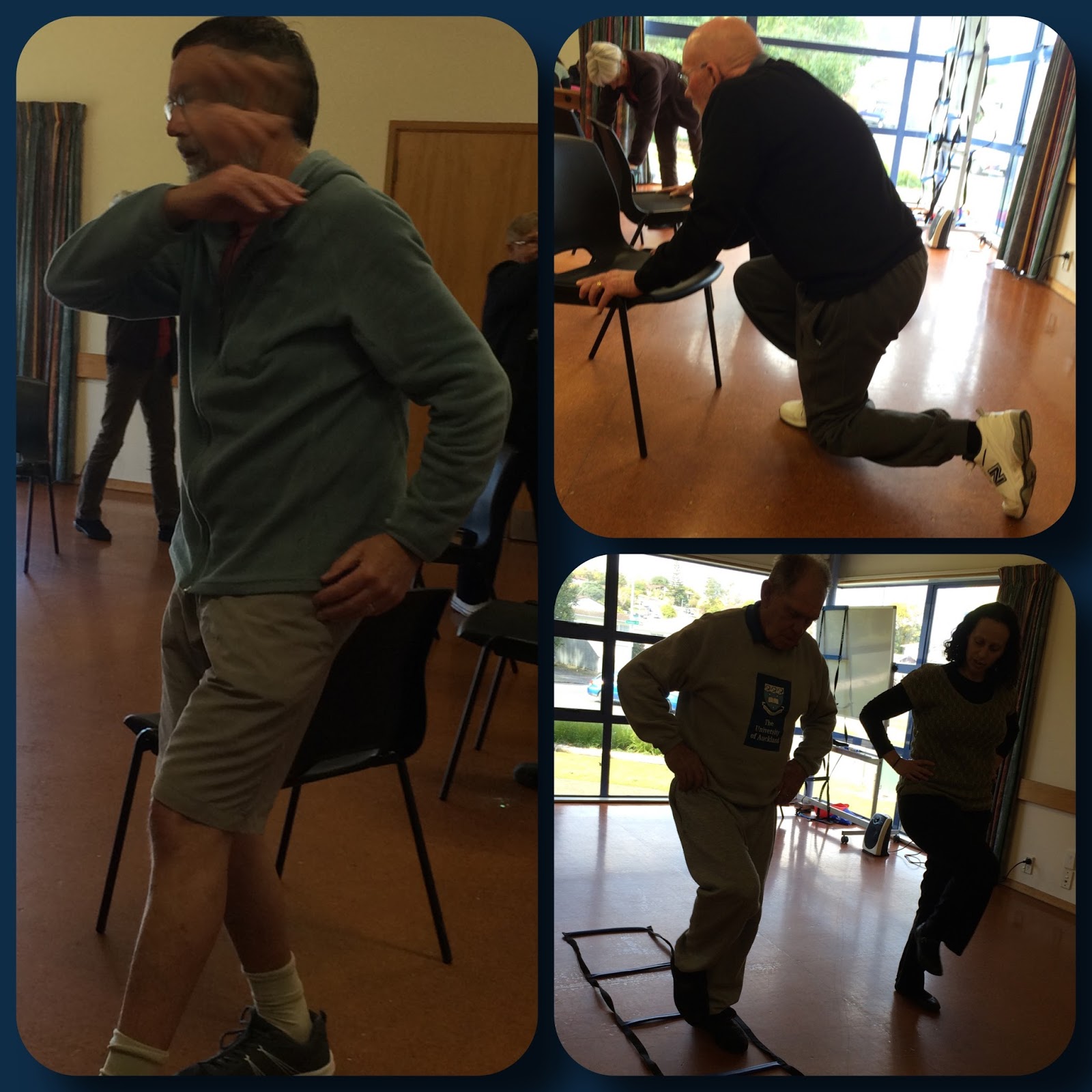
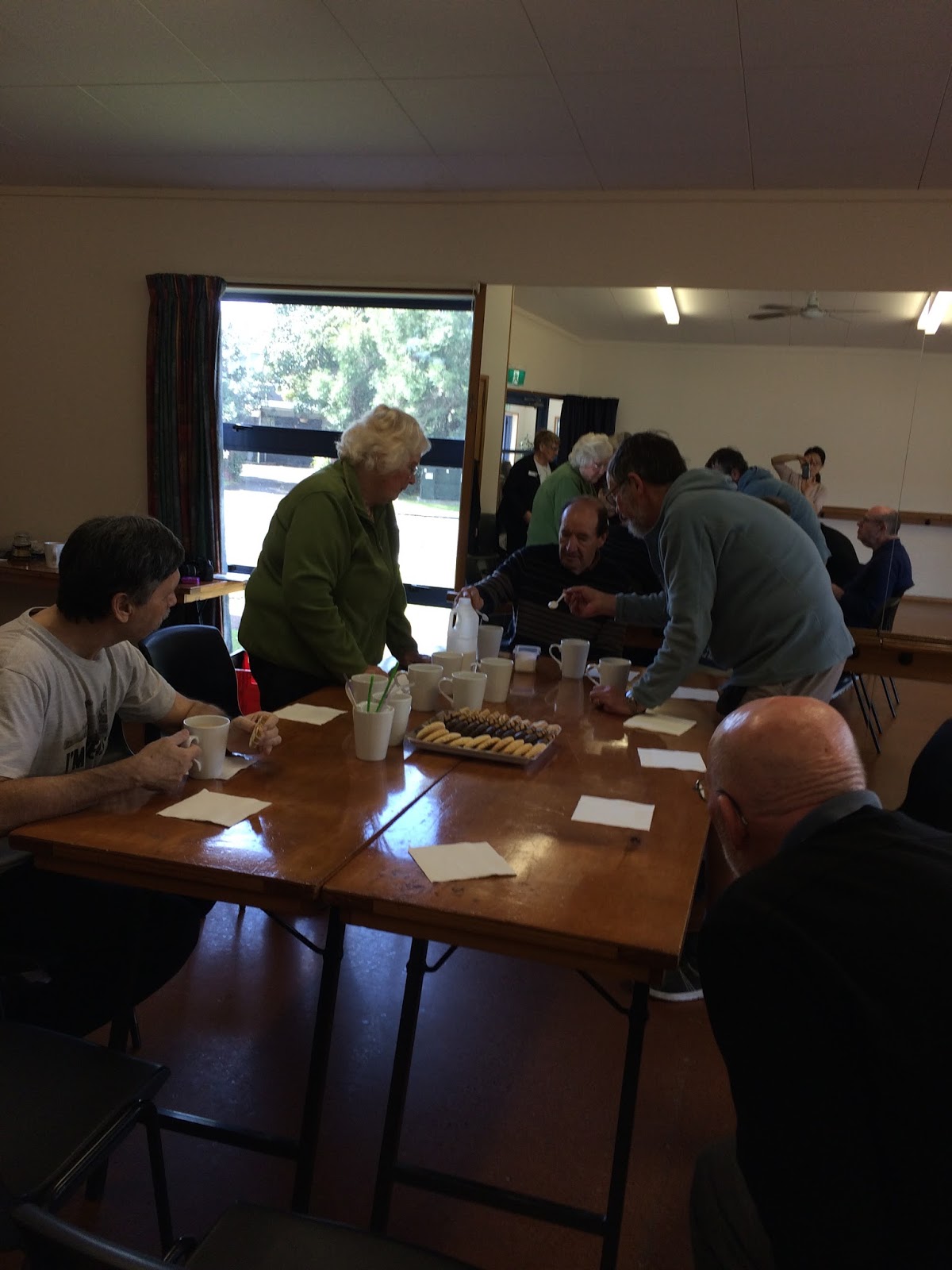
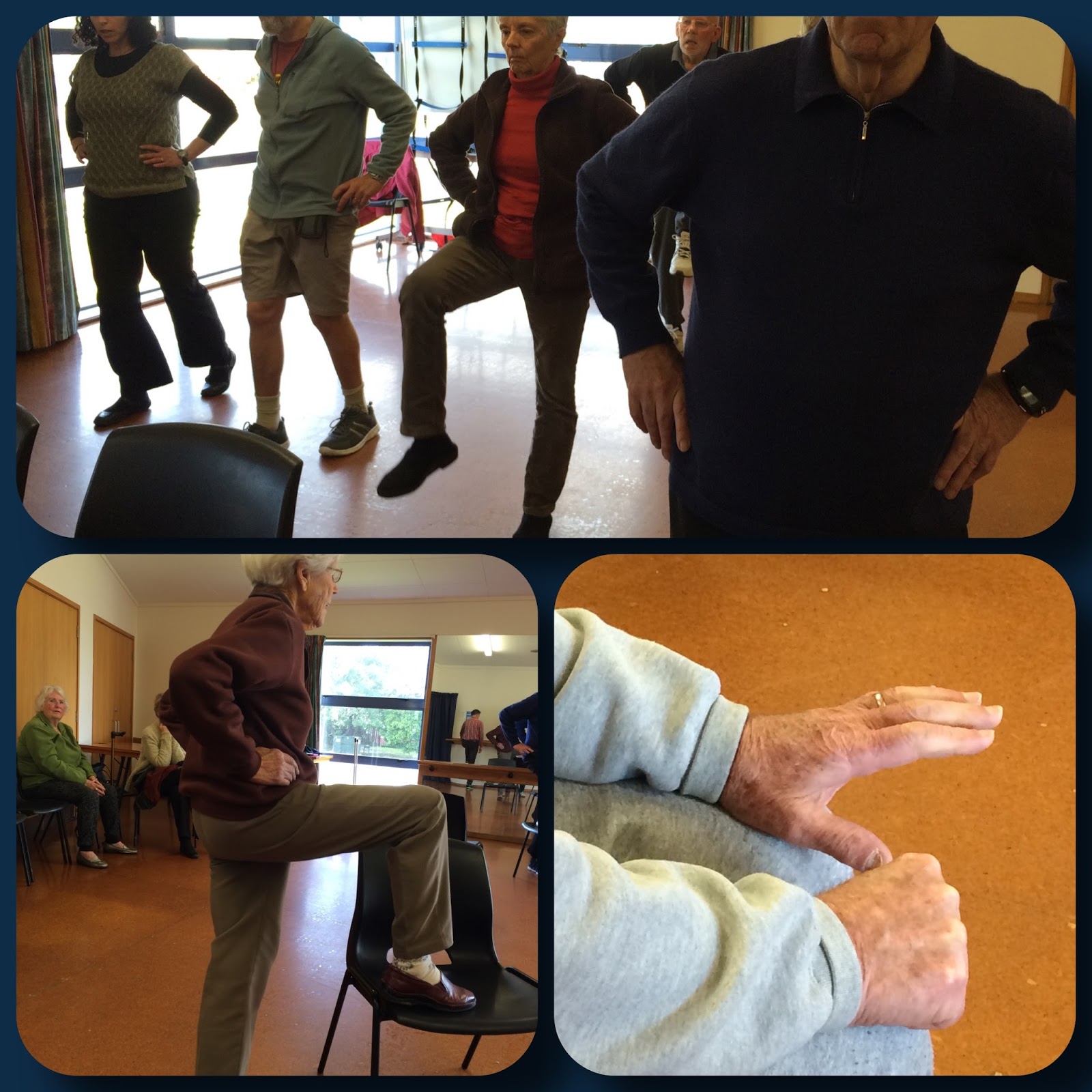
    I carefully listed out elements my carefully structured program for my clients to give feedback about in language that was clear and accessible (this is an incredibly intelligent bunch of people — but that doesn’t mean that they know or care what a task series or rhythmic intention is).  I listed things like learning to change position and to stand up fluently, seated exercises, arm and shoulder exercises, fine manipulation and handwriting, speech and facial expressions, walking and balancing activities, memory and concentration work, stretching, and I included the pre-program greeting round and the post program morning tea amongst my activity list.


    I list these out because from my perspective each are so important and a lot of planning and thought goes into getting ready to lead a large Parkinson’s group.  My clients were all happy with the program and with the balance of the activities and few had suggestions about what they wanted done differently.  They listed outcomes that included better balance and being able to get up from the chair easier or safer, or having less shoulder pain.  But when asked what the most important thing that they got out of the group was, not a single person listed an activity or something mobility related.  You guessed it – psychosocial outcomes were once again featured as the most important.
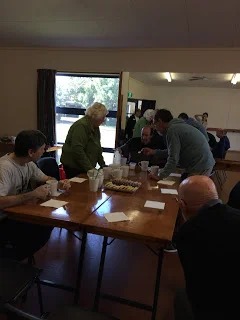
    Here are some of the responses:

    “Having Parkinson’s feels more normal to me, I see that everybody is affected differently and I don’t feel as strange in this group” said one person;

    “I have more confidence in myself” said another.

    “Realizing that exercise is more pleasant when done with other people” said VW;

    “The way the others encourage me” said RH;

    “Enjoyment of the group” stated BB, “Oh, and the laughing!”

    TM wrote “companionship”; DS noted “fellowship”; JW agreed with one word, “friendship”.

    Two weeks later, I still get shivers reading these responses.  I feel so proud of this little micro-community, and of the positive and supportive environment that they provide for each other, which allows them to thrive and blossom despite having Parkinson’s.  Two weeks later, and that really isn’t a very long time, I realize that I miss them.  That I miss the community spirit of this wonderful group and their wives or husbands who often come along; That I miss the laughter, the fun, the games, and the fellowship, and that I’m glad that the school holidays are over and that I look forward to getting my dose of this wonderful community again this Friday morning.
     

  • It's how you get on the stretcher that counts…

    It's how you get on the stretcher that counts…

    It is never nice to see someone go to hospital by ambulance JW, but now that I know you are home and on the mend I want to tell you, and tell the world, how proud you made me in the moments just before you got into the ambulance.  

    I don’t want to write about how the colour of your face scared me when we first called the ambulance.  I also don’t want to talk about how awesome we must have looked to all passerbys while we were both lying in the mud behind the building near the parking lot waiting for the ambulance.  I don’t even want to talk about the great team work and kindness of friends and strangers alike that went into the first aid and into ensuring that though we both were covered in mud we were protected from the hot noonday sun – even though all of these things are worthy of talking about, I have something else to say.

    I want to say that you did me, and the conductors you have worked with before me, proud.  You participated in getting up from the ground.  There were three paramedics, myself and my assistant, and four bystanders all trying to give you instructions.  You very clearly told everyone to stop talking because your brain couldn’t take in or make sense of so much talk.   In a moment when you were at your near worst, you took control of the situation and told us all what you needed.  When I asked you to focus on just me, you locked in, maintained eye contact with me, and step by step, with one movement rhythmically commanded at a time, we got you sitting on the edge of the stretcher.  The paramedics tried to lie you down.  You said no, it’s better if I do it myself, and, exactly as we’ve practiced week after week getting on and off of the plinth, you swung your legs up and lay yourself down unassisted. 

    You made me proud JW; you showed me that you’ve mastered what we’ve been doing together over the past couple of years and that it makes life easier for you, that you can use these techniques when it counts, and that they can be used even under imperfect conditions.  I was proud – any conductor would have been proud.  That said, the next time you want to show off a skill, to demonstrate that CE is is about functional mobility, I would really appreciate it under pleasant calm circumstances instead of somewhere between a mud puddle and an ambulance good sir.  

  • Tell me what you want what you really really want

    Tell me what you want what you really really want

    Writing a blog is a relatively bizarre form of communication – I get an idea that bounces around in my head for a few days until it somehow morphs into sentences. It is usually something that touches me about someone I work with, or something that puzzles me or unsettles me, and is usually something that I’m directly interested in or passionate about that is to do with my practice and the intersection of my practice with the rest of my life.

    I really like writing and have promised myself to do more of it – but I’d like your help.  

    Are there things about Conductive Education or the health and fitness industry that you would like me to write about? Condition specific topics or something new in research or treatments or something about your condition in the news? Advice needed or challenges we can hash through? Things that make you crazy or angry, that get your heart pounding, or that you just want to to see if others are experiencing? I would love you to send me your ideas or questions – I would love to engage you more in my posts and to be able to be responsive to what interests you.  I won’t know the answers to everything you ask me but I will either do my research or find someone to answer things for us.  I want to see this blog be a connective tool that serves the Transformations and Conductive Education community.  I want to hear from you!

    I also would love to have guest blog posters – perhaps you are a conductor or other health or fitness industry professional that has something to say, would like to tell other people about your expertise or services, or would like to have a conversation or dialogue with me.  Maybe you are a service user, a client, a consumer, with a rant you want to get off of your chest, something that might help the world understand your perspective, something you have learned from the university of life.  Maybe you want to give blogging a try to see how putting it out there feels for you before you start one of your own.  Don’t be shy – I can help you with editing if you want it, you can be anonymous if you prefer, let’s get it out there!
    So big bad world way out there on the other side of my iPad – tell me what you want, make suggestions, ask questions, send me your guest posts, make some NOISE – [email protected] is the best way to find me or message me of Facebook, or call, text, even send me some snail mail.  This offer is open and ongoing – I’d love to hear from you and I’d love to see this blog grow from being something that is just my random ramblings into something that brings value to this community.  I can’t wait to hear from you – game on – who will hit me up first?

  • It’s a long way to the top and other lessons in humility…

    It’s a long way to the top and other lessons in humility…

    A conductor is certainly a specialist, but there is a very big difference between being a specialist and being an expert – and I love that difference.  I specialise in teaching people with neuro-motor disorders strategies and skills to enable them to manage their bodies better.  I don’t make up these tricks and techniques, they are not my intellectual property – and I see my role, my specialty, as being able to articulate and share these solutions as openly and as freely as possible, and to facilitate the process of sharing and tweaking solutions that have worked for other people with similar challenges.  I have learned some of these tricks from other conductors, but most have been learned by being a partner in a problem solving process with an individual, and more often by letting my clients teach me the tricks they have worked out for themselves.  This means that the expertise and success are not mine; it means that I am teacher-learner combined, it means that I’m always on the lookout for new tricks to add to my repertoire and therefore always open to learning and growing, and it means professional humility is a part of being a conductor and I love that.

    Lessons in humility come packaged in many wonderful formats.  Last week BC, a private client decided to stop training with me.  BC is a woman with advanced Parkinson’s who started training with me because she was having frequent falls and trouble getting out of bed.  After a few weeks of private in home sessions she had mastered the tricks and techniques we had been working on to the point that she is no longer falling and can now get out of bed unassisted, and she no longer needed me to come to her home and practice with her.  I could choose to dwell on not being needed – but in reality no longer being needed is the best possible outcome and I’m celebrating. Conductive humility means knowing it is not about me – and that it never was – and there is nothing better than being around somebody who learns something and stepping back to let them own it.

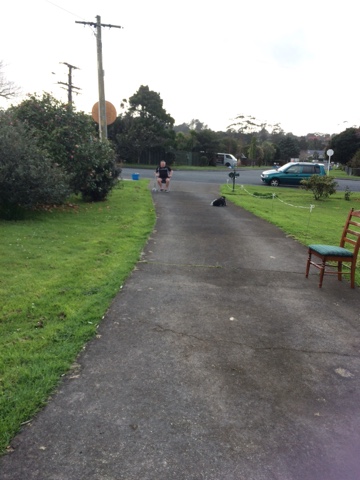
    Lessons in humility are sometimes delivered by posties on motorbikes. RP is a stroke survivor and a Harley Davidson enthusiast who has set up a rehabilitation space in his garage with parallel bars and steps – a dream workspace for a mobile conductor.  Last week while I was there working with RP, the postie – a big burly guy on a motorcycle – came up the long driveway to deliver the mail.  This week the same postie came up the driveway on his motorcycle. He had no mail to deliver, just wanted to tell RP that a few years ago he had been in a bad motorcycle crash resulting in a brain injury, and despite what everyone told him he was now walking again, and was back on his motorcycle, and that RP shouldn’t give hope.  That day, for the first time, RP and I walked all of the way down and all of the way back up his long driveway.  This week RP did it again, twice in one session.  Conductive humility is being able to celebrate that after months of RP and I working towards something together and of me encouraging and teaching RP, what got him over the hump was a burly postie on a motorcycle and his heartfelt act of kindness. 

  • What emotional intelligence?

    What emotional intelligence?

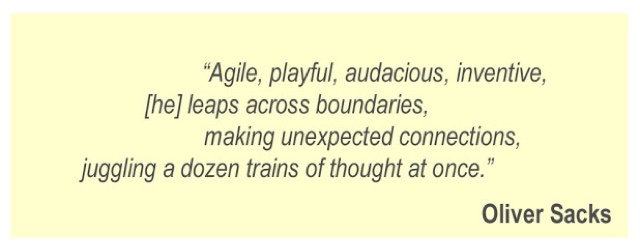
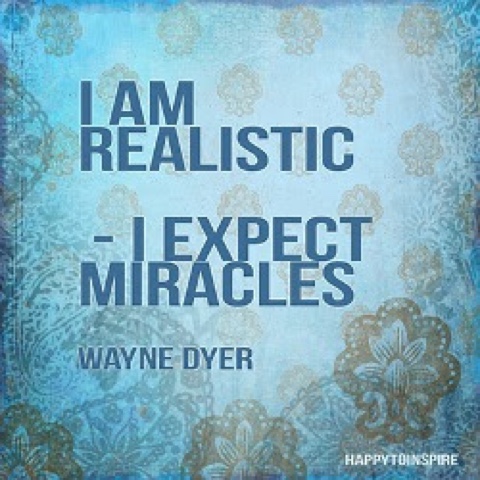
    I have been feeling wildy emotional over the past few days, bouncing between peaks and troughs as if making a sport of it.  I cried during ‘Trainwreck’, a romantic comedy I went to see specifically because I was looking for lightness.  I have spent the last hour pouring over media tributes to Dr. Oliver Sacks and pondering his legacy, only to have my reading interrupted by news that Wayne Dyer also left this world today, not even finding solace in the graceful way that they both faced their own mortality.

    On Saturday I spent an hour talking to a friend from home, a friend and soul mate whose life experiences and wisdom around those experiences have always helped me approach my own.  We spoke about healing from stressful periods in life and about the psychological effects of transitioning into the what next.  I had been cruising along until that conversation – or actually operating in cruise control mode rather than driving.  
    Part of cruise control mode came from the general feeling of relief I was experiencing – relief to have left a work situation that was causing stress, relief at not having to fight anxiety every morning on the way to work and to swallow that anxiety down so that I could give my clients the service they deserved, relief from the nightmares and tiredness and overwhelm and guilt and worry, relief from the metaphorical burden that was lifted from my shoulders, relief that I was feeling like myself again.
    The relief however was masking the rest of the transition emotions – the fear and excitement, the insecurity and confidence, the anger and elation, the simultaneous wanting to hide and wanting to fly, the too hard, too much and the can’t wait, boundless energy.  There was a two month restraint of trade in my previous contract that has conveniently forced me to lay low instead of plunging right in that I have been hiding behind – though I have been complaining about it, it has actually allowed me an incredible luxury – a pause button on my life, the option of cruise control.  But finally, with all of these emotions surging through me I feel like I’m ready to start driving again.  And it it feels great to be back in the drivers seat.
    So yes world, I’m back to being self employed, and to working privately, and to answering only to myself and to my clients.  And yes, I’m scared, and no I’m not sure how this will go, and yes I’m excited, and no I don’t have regrets, and yes I believe that I have something to offer and that I will find my place again in the big world out there, and no, thank you, I’m not going to be seeking compromise any time soon.  
    A conductor that I spoke to last week told me to succeed so that other conductors who are feeling stuck or unhappy know that they have options.  I chatted to three conductor entrepreneurs, women I admire and look up to, who assured me that though it isn’t easy on your own, it is ‘less soul destroying’ and certainly worth it.  I launched business cards and a Facebook page and was overwhelmed by the positivity and support I received. So here is to next chapters; here is to periods of transition, and here is  to my new business Transformations: Movement for EVERY Body. 

  • From Sydney with Love

    From Sydney with Love

    I have always said how lucky I am that in my work as a conductor I have met some of the most wonderful people.  Today I received a letter from one of those wonderful people – someone who trusted me as a conductor, someone who has gone on to become a much cherished friend, someone who has taught me more than I could ever hope to teach her, someone I hope to make proud as I start again again in my new venture in Conductive Education.  

    Maria has spoken at an international conference about how CE has benefitted her as an adult with cerebral palsy, has travelled the world competing with Sailability and more recently just for pleasure, and is working on an autobiography.  

    But today she took the time to write these words, which I am humbled to share with you:

    Maria writes…

    My sincere congratulations to Lisa for launching her new business,Transformations: Movement for EVERY Body.  I wish Lisa every success in her new venture.


    I met Lisa in 2003 when my husband and I were invited to take part in a pilot program of Conductive Education.  This program was aimed at adults with Cerebral Palsy, and was the first of its kind for adults in Australia.


    I had heard about Conductive Education but really did not know what to expect or how the treatment could help me, but at the age of 48, I was willing to try anything that might help me to keep my mobility and independence. Despite being born with Cerebral Palsy, I have always taken great pride in my independence but as I age, my independence has become slowly increasingly difficult to maintain.


    It was mid way through my second term of Conductive Education that I began to understand the fundamentals of the treatment.  I started to implement much of what I had learnt in Conductive Education to help me in my everyday life. I found myself using controlled breathing and counting in my head when I had difficulty in doing simple tasks.  It always works for me.


    In December 2010 I made a submission to present a paper at the 7th World Congress on Conductive Education in Hong Kong.  My submission titled “Conductive Education Is Not Only For The Young” was accepted and with the support of Lisa and Alexander I travelled to Hong Kong and presented my paper.  I was very proud to present my paper and I enjoyed listening to other presenters speaking about the many aspects of Conductive Education.


    Unfortunately I do not have access to Conductive Education any longer. I now attend a main stream gym and work out in the swimming pool weekly. In many ways both are similar to Conductive Education but they don’t teach me the tasks I need to remain independent.


    I often wonder how different my life would have been if I had access to Conductive Education at a young age


    Maria Dalmon.